
Menu
Close

To provide the best experience, we use technologies like cookies to store and/or access device information. Consenting to these technologies will allow us to provide data such as browsing behaviour or unique IDs on this site. Not consenting or withdrawing consent may adversely affect certain features and functions.
Allow All
MUNICH, Germany — January 16, 2024 — Atmen, a Munich-based regulatory technology company, announced a successful €1.3 million pre-seed funding round today. The round was led by Revent with co-investment from Vireo Ventures with participation from UnternehmerTUM and angel investors. Atmen, previously known as Point Twelve, harnesses IoT and SaaS to provide transparent, dynamic and automated carbon intensity tracking supporting the official certification process for energy-intensive industries. The company starts with hydrogen and e-fuels.
Atmen’s technology is poised to meet the surging demand for precise, scalable processes in support of certification, especially crucial for energy-intensive industries that contribute significantly to CO2 emissions. The investment will accelerate Atmen's mission to support the official certification process by replacing outdated, manual, unpredictable processes with a streamlined, automated approach.
“We are thrilled to lead Atmen's funding round,” said Henrik Grosse Hokamp, Partner at Revent. “Industrial decarbonization is one of the most pressing challenges of our decade. Unless carbon intensity is continuously tracked and certified, producers cannot prove their target achievement and product decarbonization cannot be incentivized.”
Atmen addresses a critical energy transition segment by focusing on hydrogen and e-fuels. The evolving EU regulations, including the Renewable Energy Directive mandating a 42% renewable hydrogen quota by 2030 and financial mechanisms like the EU Emissions Trading System and Carbon Border Adjustment Mechanism, are pushing industries towards greener alternatives. These regulations, along with potential penalties for not using sufficient synthetic fuels in sectors like maritime and aviation by 2030, create a compelling economic factor for industries to adapt.
Atmen recognizes the challenges of aligning with market demands and regulatory compliance. To tackle these issues, the company offers technology that enables producers to incorporate automated, streamlined processes to support sustainability certification right from the initial design phase of their products and supply chains. In addition, the company collaborates with industry partners to both promote Digital Product Passports as a norm for hydrogen and e-fuels and to enable compliance technologies.
Leading renewable hydrogen producer Lhyfe and TÜV NORD count among Atmen's key partners.
Digital Product Passports digitally record, process, and share product sustainability information among supply chain partners, authorities, and consumers. This initiative aims to help hydrogen and e-fuel producers comply with changing regulations and globally competing certification standards.
"We are at a turning point in how industries verify their sustainability efforts," remarked Flore de Durfort, Co-founder & CEO of Atmen. “Hydrogen and e-fuels are a core piece of industrial decarbonization, but also the first energy-intensive products for which the pressure and complexity to prove and certify decarbonization are so acute”.
“Carbon intensity tracking and certification processes are the biggest pain points in scaling the green hydrogen economy and we believe that Atmen´s solution has the potential to become the industry-setting standard in this field. Once achieved, this offers enormous potential to be a new category-defining player to support official certification of all low-carbon products.,” added Sven Heiligtag, Partner at Vireo Ventures.
With this funding, Atmen is well-positioned to deliver its cutting-edge automation platform to market, supporting the transition to a low-carbon economy.
Atmen is a regulatory technology company based in Munich, Germany, innovating in carbon intensity certification automation. The company was founded by Flore de Durfort, Quentin Cangelosi and Erika Degoute in Munich in January 2023 with competencies at the crossing of energy markets and regulation and technology. With a focus on energy-intensive industries, Atmen’s platform is designed to facilitate large-scale, verifiable decarbonization processes. For more information, visit www.atmen.co
Revent is an Impact VC fund investing in startups across Europe using technology to drive systemic change in climate, health, and economic empowerment sectors. With a hands-on approach, Revent empowers companies to combine purpose with profitability. Contact: Henrik Grosse Hokamp, henrik@revent.vc, www.revent.vc
Vireo Ventures is a Venture Capital firm that invests in European early-stage start-ups. The Vireo Electrification Fund invests in technology companies that seek to shape and benefit from accelerating the energy transition via decarbonized electrification, from renewable energy production, smart grids, and infrastructure all the way to applications in areas such as emobility, real estate, and industry. The founders of Vireo Ventures combine decades of experience with extensive networks in the energy industry and leverage their expertise when supporting portfolio companies. Contact: Matthias Engel, matthias@vireo.vc , www.vireo.vc
- Edited on 6th June 2024 for clarity -

(Munich, March 10, 2026) Last week, Germany took a significant step toward closing remaining gaps in renewable fuel regulation. The Bundestag held the first reading of the Second Law on the Development of the Greenhouse Gas Reduction Quota, which will transpose RED III into national law and, for the first time, introduce explicit quotas for green hydrogen and e-fuels in the transport sector.
While most of Europe works toward RED III compliance, industrial offtakers are already demanding certified molecules as regulatory deadlines near. Siemens, Atmen, and TURN2X, all based in Munich, have developed the first end-to-end model for RED III-ready renewable gas production, from automated plant operations to certified product delivery. The plant of the future is already running at TURN2X's first commercial e-methane plant in Miajadas, Spain.
TURN2X produces climate-neutral e-methane by combining green hydrogen with biogenic CO₂. The company plans to scale this model across Europe, aiming to cover 10 percent of Germany’s gas demand by 2031. Miajadas demonstrates the commercial viability of this pathway, with 100 percent of its renewable gas output sold under long-term off-take agreements.
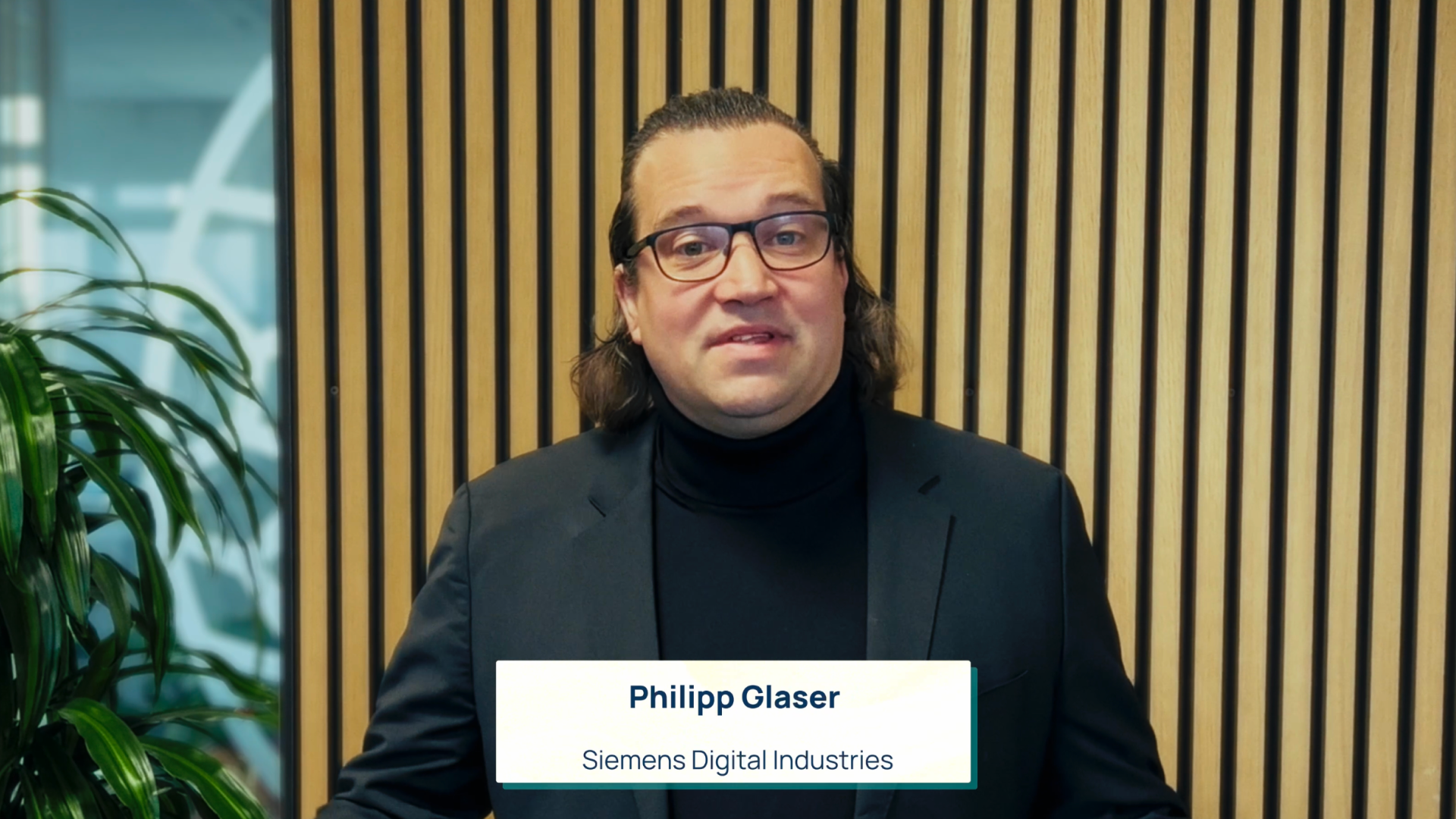
Siemens provides the industrial backbone for this model, including advanced automation systems, digital twin technology for remote plant operation, and standardised, secure deployment of future facilities.
Siemens adopts an ecosystem approach, collaborating with leading partners such as Atmen rather than developing every component in-house. “This is exactly how we at Siemens want to go forward in renewable energies,” says Philipp Glaser, Siemens Digital Industries. “We want to partner with the best solutions so our customers get innovation, technology, and speed of implementation.”
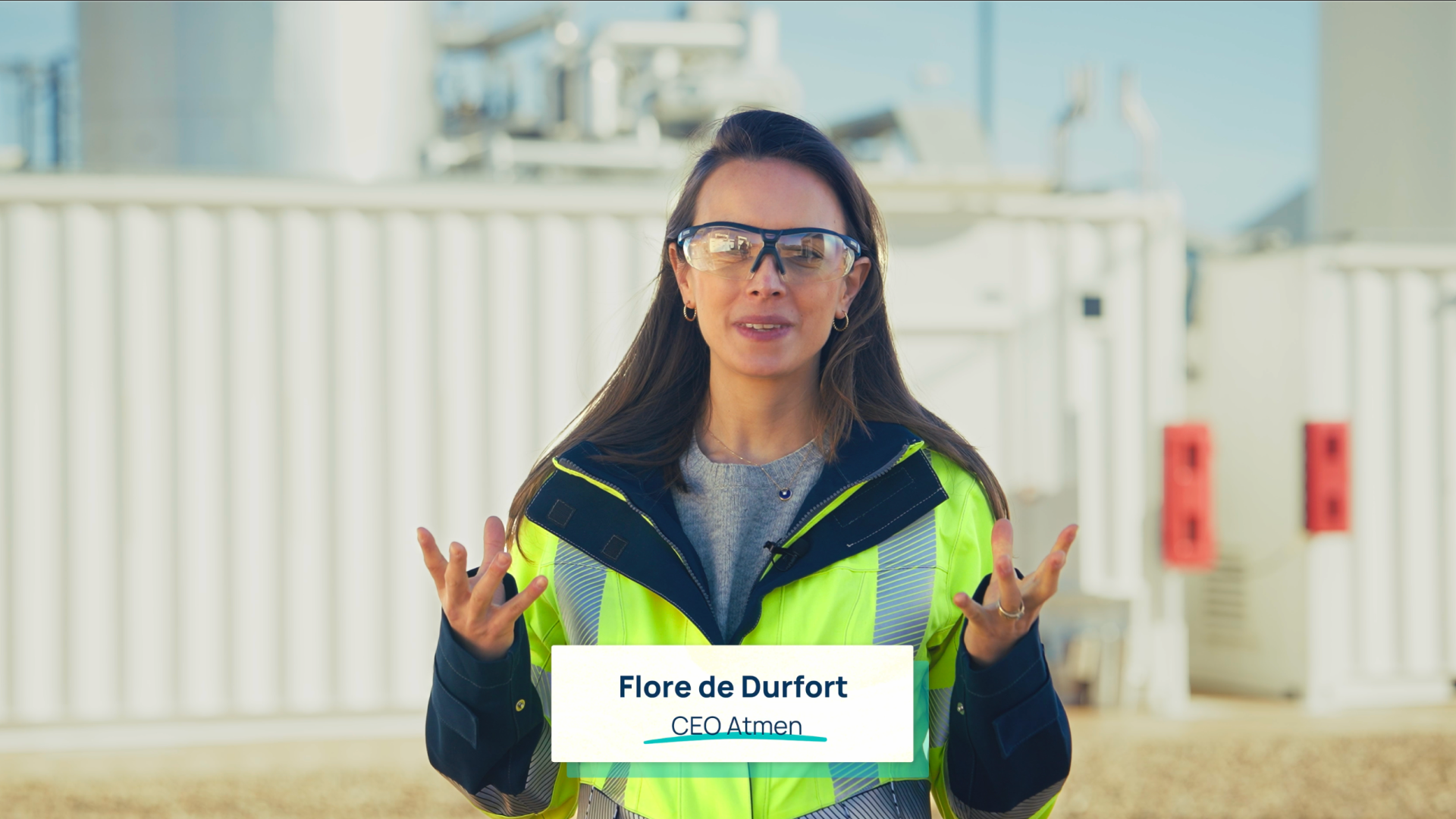
Atmen, a regulatory technology company, provides the certification data layer. At Miajadas, this enabled the site to reach full RFNBO certification, making automated compliance part of day-to-day operations.
“Certification isn’t a nice-to-have; it’s market access and business case realization,” says Flore de Durfort, CEO of Atmen. “Our platform turns operational data into verifiable, auditable proof that keeps production continuously certification-ready so that renewable fuel producers can scale with confidence.”
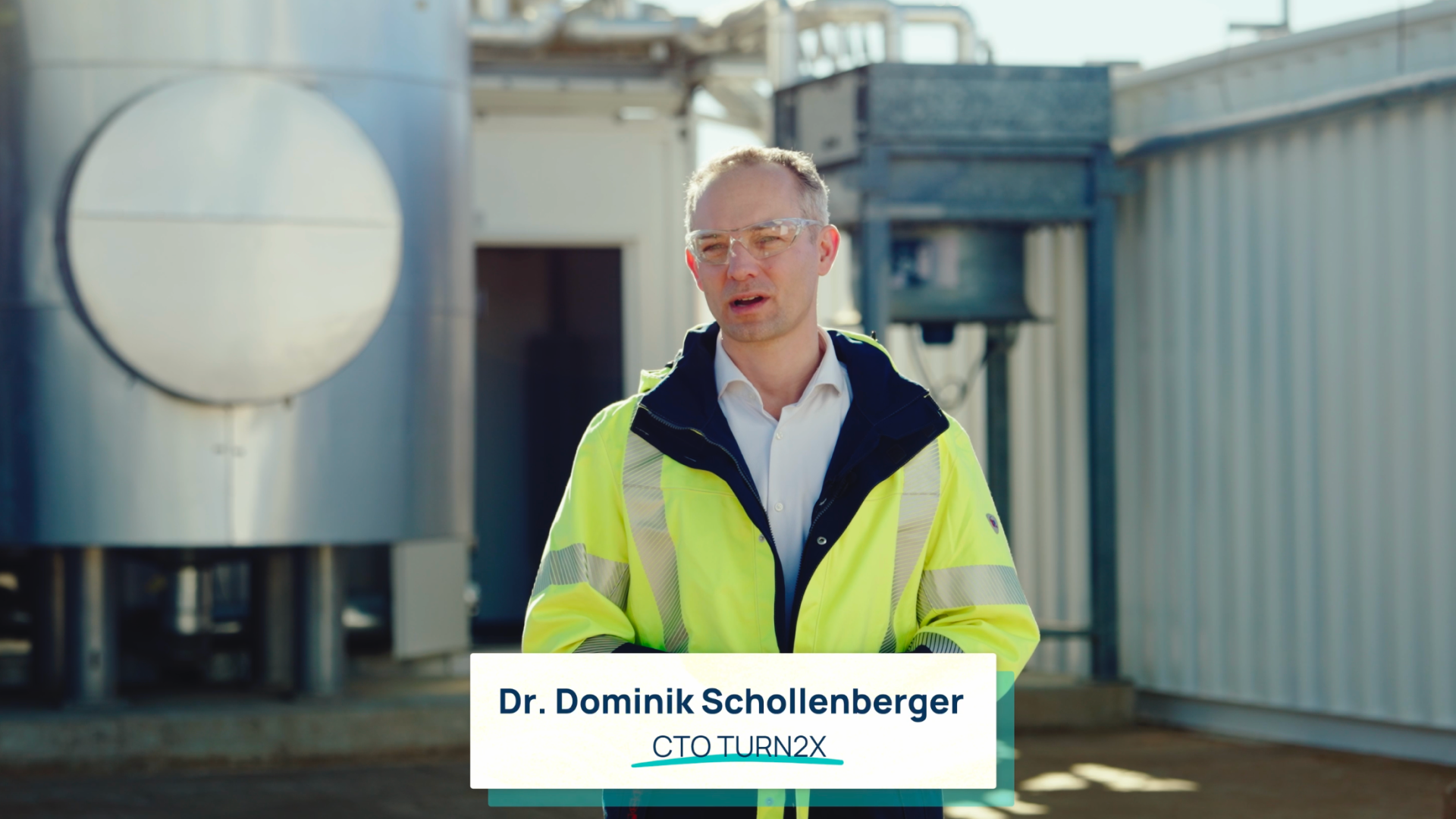
For TURN2X, combining Siemens’ industrial technology with Atmen’s compliance layer creates a blueprint for rapid, reliable expansion.
“Scaling across Europe brings two challenges: maintaining operational excellence and meeting increasingly complex certification requirements for renewable fuels,” says Dr. Dominik Schollenberger, CTO of TURN2X. “The Miajadas plant shows that when intelligent operations and built-in compliance come together, e-methane can scale with the reliability our customers expect.”
The three companies share a single goal: scaling green energy production with intelligence, trust, and speed.
The plant of the future isn’t a vision. It’s running today in Miajadas.
About TURN2X
TURN2X develops and operates projects using its proprietary technology to produce e-methane by combining biogenic CO₂ with green hydrogen. The company focuses on scalable, infrastructure-ready renewable gas solutions that support industrial decarbonization and energy security.
About Siemens
Siemens AG (Berlin and Munich) is a leading technology company focused on industry, infrastructure, mobility, and healthcare. The company’s purpose is to create technology that transforms everyday life for everyone. By combining the real and the digital worlds, Siemens empowers customers to accelerate their digital and sustainability transformations, making factories more efficient, cities more livable, and transportation more sustainable. A leader in industrial AI, Siemens leverages its deep domain know-how to apply AI – including generative AI – to real-world applications, making AI accessible and impactful for customers across diverse industries. Siemens also owns a majority stake in the publicly listed company Siemens Healthineers, a leading global medical technology provider pioneering breakthroughs in healthcare. For everyone. Everywhere. Sustainably. In fiscal 2024, which ended on September 30, 2024, the Siemens Group generated revenue of €75.9 billion and net income of €9.0 billion. As of September 30, 2024, the company employed around 312,000 people worldwide on the basis of continuing operations. Further information is available on the Internet at www.siemens.com.
About Atmen
Atmen (atmen.co) is a regulatory technology company providing the data infrastructure that powers trusted certification of industrial products. Atmen focuses on automating certification and enabling large-scale, verifiable supply chain transparency across energy-intensive industries.
Founded in January 2023 by energy and regulation experts Flore de Durfort, Quentin Cangelosi, and Erika Degoute, Atmen has raised €6.3M to date to build technology that certifies industrial goods, starting with renewable gases.
Headquartered in Munich, the company's platform is deployed across industrial sites in 9 countries, automating certification workflows and enabling verifiable proof of product attributes throughout the supply chain.


A new EU-funded project (SURFER) will support Europe’s energy transition by creating more resilient, decarbonised energy systems by advancing hydrogen electrolysers. Atmen joins the consortium to demonstrate how flexible electrolysers can support the penetration of renewables on the power grid.
Variable renewable energy sources (VRES), such as solar and wind, have become the cheapest energy sources available. However, the intermittent nature of VRES presents significant energy storage issues, and this has limited their deployment. At the same time, the production of green hydrogen from electrolysers is projected to represent a significant fraction of the energy usage in Europe’s future, decarbonised energy system. As electrolysers are very quick to start and stop, hydrogen can function as an energy buffer for renewable energy.
The Clean Hydrogen Joint Undertaking’s project SURFER (Supporting Uptake of Renewables with Flexible Electrolysers for Resilient energy systems) aims to facilitate the widespread deployment of variable renewable energy sources by demonstrating the use of flexible electrolysers as dynamic energy buffers. It also aims to stabilise multiple types of energy networks, focusing primarily on power grids, but also considering heat valorisation and isolated or weak grids.
SURFER brings research and industry partners like Atmen together to demonstrate, in real operating environments, how flexible electrolysers can support the stability of the power grid. This capability is essential for scaling both renewable power and renewable hydrogen in Europe.
The project brings together research institutions, industrial operators, grid actors, and digital compliance experts, including Atmen, to study and demonstrate how flexible electrolysers can be integrated into the power grid.
“SURFER addresses two of Europe’s key energy challenges at once: reducing the cost of green hydrogen and enabling higher adoption of renewables”, says project coordinator at SINTEF, Dr. Federico Zenith.
“High shares of renewable electricity introduce volatility and new constraints for power systems,” says Quentin Cangelosi, Co-founder of Atmen. “SURFER brings research and industry partners like Atmen together to demonstrate, in real operating environments, how flexible electrolysers can support the stability of the power grid. This capability is essential for scaling both renewable power and renewable hydrogen in Europe.”
SURFER's multi-disciplinary consortium consists of leading research institutions, hydrogen producers, grid operators, equipment manufacturers, and safety and certification experts. Together they will address the complexities of electrolyser dynamics and energy system integration, significantly advancing beyond the state-of-the-art.
The main goal of the project is to enable electrolysis plants to make additional revenues from power grid stabilisation, also making the latter more resilient and decarbonised with increased VRES adoption and maximisation of their use. The project will improve energy security and drive down costs, thanks to additional sources of revenues and heat integration, thus supporting Europe's energy transition goals.
Through multiple demonstrations across diverse European sites, including operational environments in France, Germany, and Norway, the project will improve the integration of these electrolyser technologies into the energy system. The partners will be the first in the world to provide grid services with electrolysis plants on a commercial basis.
The project will demonstrate the capabilities of Proton-Exchange Membrane ELectrolyser (PEMEL), Alkaline Electrolyser (AEL) and Solid Oxide ELectrolyser (SOEL) to rapidly modulate their operation to accommodate variations in renewable energy supply, grid demand and waste heat when available. The partners have made available their already existing, large-scale sites, rated up to 10 MW for PEMEL, 1.5 MW for AEL and 300 kW for SOEL.

© Copyright Atmen 2024 and Beyond
Designed By The Sourdough
© Copyright Atmen 2023 and Beyond
Designed By The Sourdough