Menu
Close

To provide the best experience, we use technologies like cookies to store and/or access device information. Consenting to these technologies will allow us to provide data such as browsing behaviour or unique IDs on this site. Not consenting or withdrawing consent may adversely affect certain features and functions.
Allow All
RFNBO certification can sound abstract until you look at where the hydrogen goes.
Qair, an independent renewable energy company, is building a renewable hydrogen ecosystem in Occitanie, southern France, with refueling stations in Béziers and Narbonne serving intensive mobility along some of southern France’s key transport routes.
At a hydrogen refueling station, the abstract hydrogen journey becomes tangible: hydrogen arrives, is stored and dispensed and eventually leaves in the tanks of a wide range of vehicles.
But behind that physical movement sits another, less visible flow. The data and evidence supporting the hydrogen’s RFNBO claim need to keep pace.
That connection between physical flows and certification data sits at the heart of Dh’Occ’s latest milestone: achieving RFNBO certification under the CertifHy EU RFNBO Voluntary Scheme, following an initial audit conducted by TÜV Rheinland.

Béziers and Narbonne hydrogen refuelling stations, are two key infrastructures of the Corridor H2 Occitanie. Strategically located along major road transport routes, they contribute to the development of a hydrogen mobility corridor connecting the Iberian Peninsula with Northern Europe.
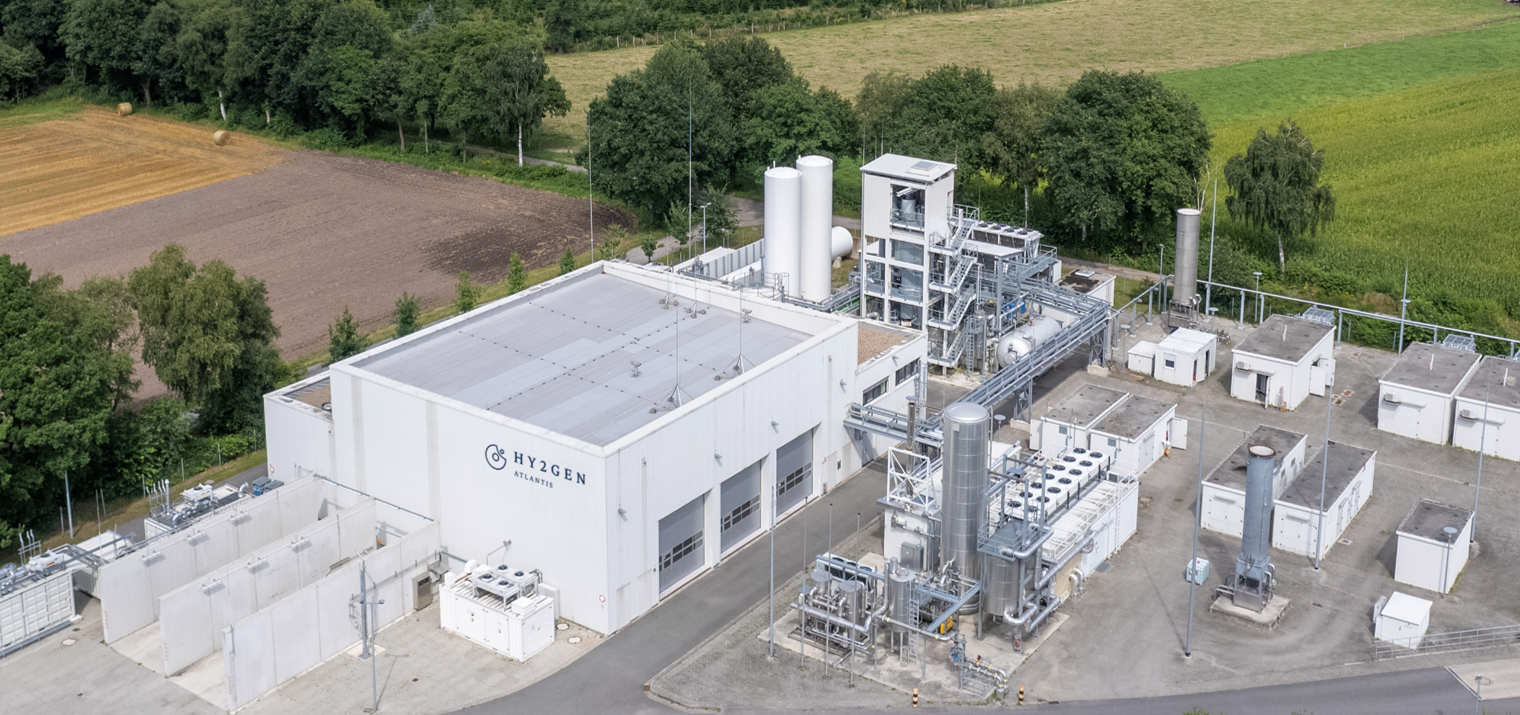
Together with Hyd’Occ, Qair’s renewable hydrogen production plant at Port-La-Nouvelle, the stations form part of an integrated value chain connecting the production, transport and distribution of renewable hydrogen.
That continuity is managed through a mass balance system. Under CertifHy, operators account for certified product flows by linking inputs, outputs and inventory with their corresponding sustainability and GHG information.
For Dh’Occ, this means accounting for the hydrogen received, stored and dispensed at the certified stations while preserving the information behind its RFNBO claim.
Put simply: as hydrogen leaves through the pump, the evidence cannot be left behind.
Qair and Atmen worked closely throughout Dh’Occ’s preparation for RFNBO certification.
Through Atmen Automate, Atmen provided the certification infrastructure behind the process, translating Dh’Occ’s supply chain setup into the data, checks and calculations that demonstrate RFNBO compliance under the CertifHy scheme. These workflows were backed by the documented evidence and traceability needed for audit readiness.
But the goal was never simply to assemble documentation for an audit. The same setup is designed to keep supporting traceability as operations continue and hydrogen volumes and deliveries grow.
“Dh’Occ is a great example of RFNBO certification becoming tangible through mobility. As hydrogen moves through the value chain, the underlying data and traceability need to keep pace. We’re glad Atmen can provide the certification infrastructure to support that.” — Nadeen Gboor, Solutions Engineer at Atmen
We are proud to have supported Qair in reaching this milestone and look forward to the project’s continued success. You’ll hear more about the Atmen x Qair collaboration in the following months!